

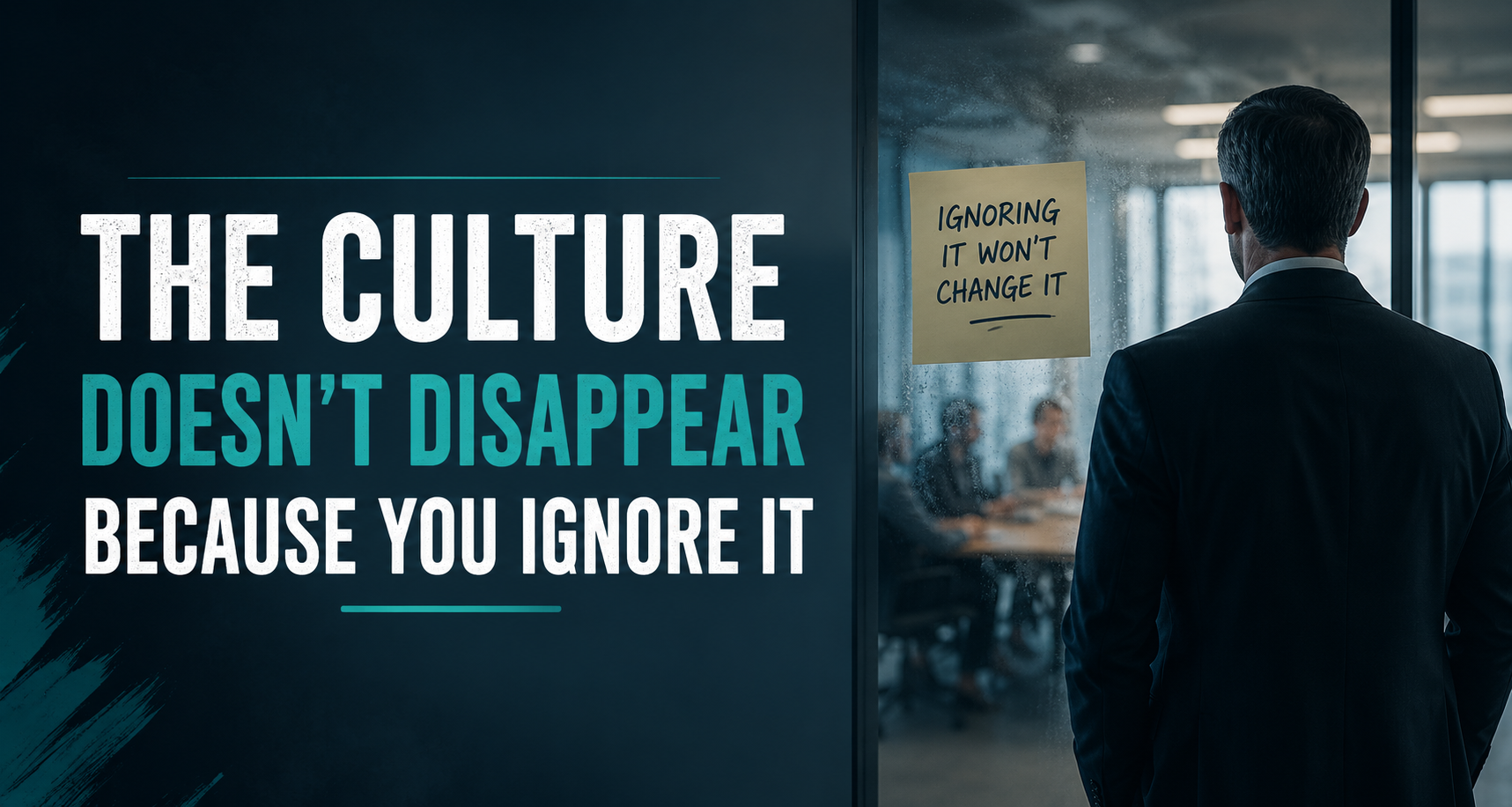
Our Founder and CEO, James Leavesley, shares why organisations struggle to accept culture assessment findings, plus the trust they risk losing when they do.
Most organisations don’t struggle to collect employee feedback. Surveys are launched, focus groups are facilitated, interviews are conducted, and dashboards are produced. The real challenge begins when the results arrive.
Recently, I encountered two separate conversations that highlighted a common problem.
In the first, an HR Director wanted a more comprehensive understanding of their organisational culture. However, because they were part of a larger group, the parent company insisted on using a predetermined set of survey questions. Those questions had been used for several years and leadership bonuses were linked to the results.
The survey was completed. The findings were analysed. The results suggested that employee sentiment had deteriorated and that the organisation appeared to be moving backwards.
The Leadership’s Response? They chose not to share the findings with employees because they didn’t want to acknowledge that there was a problem.
In the second conversation, a Leadership Consultant had undertaken a much broader culture assessment. Surveys, focus groups and one-to-one interviews had been conducted to create a detailed picture of another organisation.
The findings revealed significant opportunities for improvement.
When the results were presented to the executive team, the response was immediate:
“This isn’t an accurate picture of the organisation.”
“You must have spoken to the wrong people.”
“We don’t believe the findings.”
Different organisations. Different approaches. The same outcome. The data was rejected because the message was uncomfortable.
____________________________________
Culture Exists Whether You Measure It or Not
One of the biggest misconceptions in organisational life is that culture is something that can be controlled through messaging, values statements or leadership presentations. Culture is not what leaders say it is. Culture is what people experience every day. It is reflected in how decisions are made, how people are treated, what behaviours are rewarded, what behaviours are tolerated and how employees feel when nobody from the Leadership is in the room. It’s crucial to remember that:
- Whether an organisation chooses to measure culture or not, culture continues to develop.
- Whether leaders accept the findings or not, employee experiences remain unchanged.
- Ignoring feedback does not improve culture.
- Rejecting the data does not change reality.
- Choosing not to discuss problems does not make them disappear.
- Culture is happening regardless.
The only question that matters is whether leadership is willing to understand, and improve, their workplace culture.
____________________________________
The Trust Cost of Silence
MY first example above raises an important question:
What message does it send when employees are asked for feedback and then never hear the results or any outcomes?
Employees are not naive. They know when surveys have taken place. They know when focus groups have been conducted and they notice when nothing is ever communicated afterwards.
In many cases, silence creates a narrative far worse than the actual findings.
Employees begin to assume:
- Leadership didn’t like what they heard.
- Leadership isn’t prepared to listen.
- Leadership isn’t interested in acting.
- The survey was simply a box-ticking exercise.
Trust is built when organisations demonstrate that they are prepared to hear difficult truths. Trust is damaged when employees believe their voices have been ignored. Interestingly, employees rarely expect perfection from leadership. What they do expect is honesty.
Most workforces can accept hearing:
“The results aren’t where we want them to be.”
“We have challenges that need addressing.”
“Here is what we have learned and what we intend to do next.”
What employees struggle to accept is being asked for their views and then hearing nothing at all.
The moment an organisation asks for feedback, it creates an obligation to respond.
____________________________________
Why Leaders Struggle to Accept the Findings
The reaction from the executive team in the second example is also common and one I come across often.
When leaders are presented with evidence that the culture is unhealthy, the first response is often not curiosity, it is defence.
There are several reasons for this:
1. Leaders Experience a Different Organisation
Senior leaders often occupy a very different reality from the rest of the workforce. People tend to be more careful around senior leaders. Problems are filtered. Bad news is softened. Difficult conversations are delayed. Over time, leaders can become insulated from the everyday experiences of employees. When culture assessment findings challenge their perception, it can genuinely feel as though the data is describing a different organisation.
2. The Findings Feel Personal
For many leaders, organisational performance and culture become closely linked to personal identity. If the culture is unhealthy, it can feel like a judgement on their leadership. As a result, feedback that should be treated as valuable information is instead experienced as criticism. The natural human response is to defend rather than investigate.
3. Confirmation Bias Is Powerful
We all look for evidence that supports what we already believe. If leaders believe their organisation is a great place to work, they will naturally focus on data that reinforces that belief and question data that challenges it. This is not a leadership problem. It is a human problem. However, effective leaders recognise this tendency and deliberately seek out evidence that may prove them wrong.
4. Change Creates Uncertainty
Accepting the findings creates a responsibility to act. Action often means changing behaviours, systems, processes and sometimes leadership approaches. That can be uncomfortable. Rejecting the findings allows leaders to avoid the uncertainty and effort that meaningful change requires. In the short term, denial feels easier. In the long term, it is usually much more expensive.
____________________________________
The Best Organisations Treat Feedback as a Gift
The healthiest organisations are not those with perfect culture scores. They are the organisations willing to confront reality. They understand that feedback is not a threat. It is intelligence. It provides an opportunity to identify issues before they become bigger problems. It highlights blind spots. It creates the foundation for improvement. Most importantly, it demonstrates to employees that leadership is prepared to listen.
Culture assessment should never be viewed as a pass-or-fail exercise, its purpose is not to validate leadership it is to understand reality – namely, because once you understand reality, you can begin to improve it.
____________________________________
The Real Question
The organisations in both of my recent examples had access to valuable information, yet one chose to hide it and the other chose to challenge its validity – ultimately, neither response changed the underlying culture. The real question for leaders is not:
“Do we like the findings?”
The real question is:
“Are we prepared to learn from them?”
Because culture does not improve when feedback is collected, culture improves when feedback is accepted, discussed and acted upon.