

CULTURE ASSESSMENT FOR FINANCIAL SERVICES
Understand the behind conduct
The Cultiv8tiv Financial Services Assessment gives leaders an honest view of how culture is experienced across their organisation.
Gather anonymous employee feedback, assess the conditions influencing everyday behaviour and identify the cultural risks that policies, processes and headline engagement scores may fail to reveal.
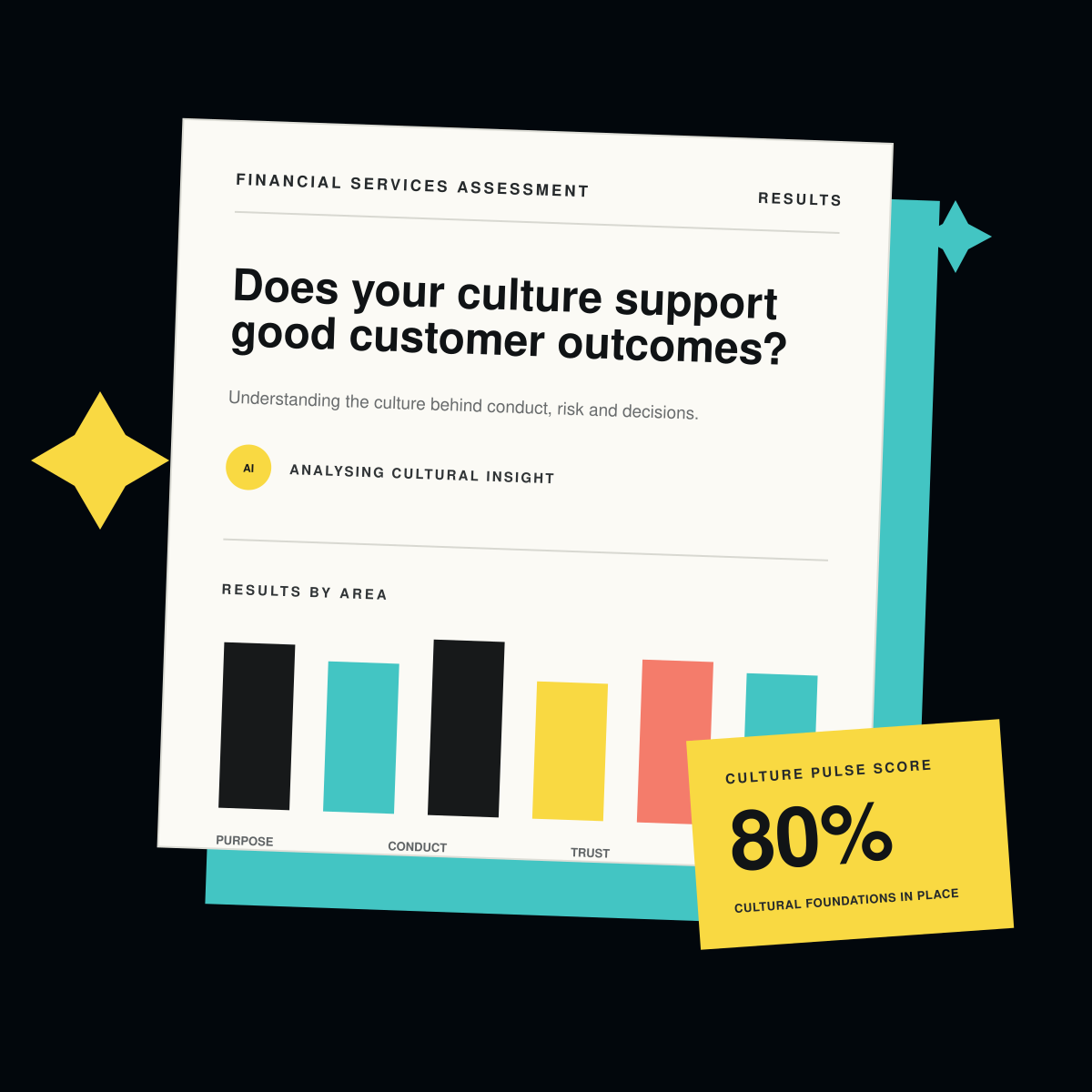
See whether your intended culture is reflected in everyday decisions.
Financial services organisations invest heavily in policies, controls and defined standards of behaviour. However, the strength of a culture is determined by what employees experience and do in practice.
Do people feel able to raise concerns? Are mistakes acknowledged and learned from? Can employees prioritise good customer outcomes when they face competing commercial or operational pressures?
The Cultiv8tiv Financial Services Assessment examines the cultural conditions behind those questions.
It gives leaders objective evidence of how purpose, values, leadership and management behaviour are experienced across the organisation, helping you identify strengths, inconsistencies and emerging areas of cultural risk.
DESIGNED FOR FINANCIAL SERVICES
Assessment questions and analysis shaped around the cultural, conduct and customer-outcome challenges facing financial organisations.
CULTURE PULSE SCORE
Receive a clear headline measure of the overall health and strength of your organisational culture.
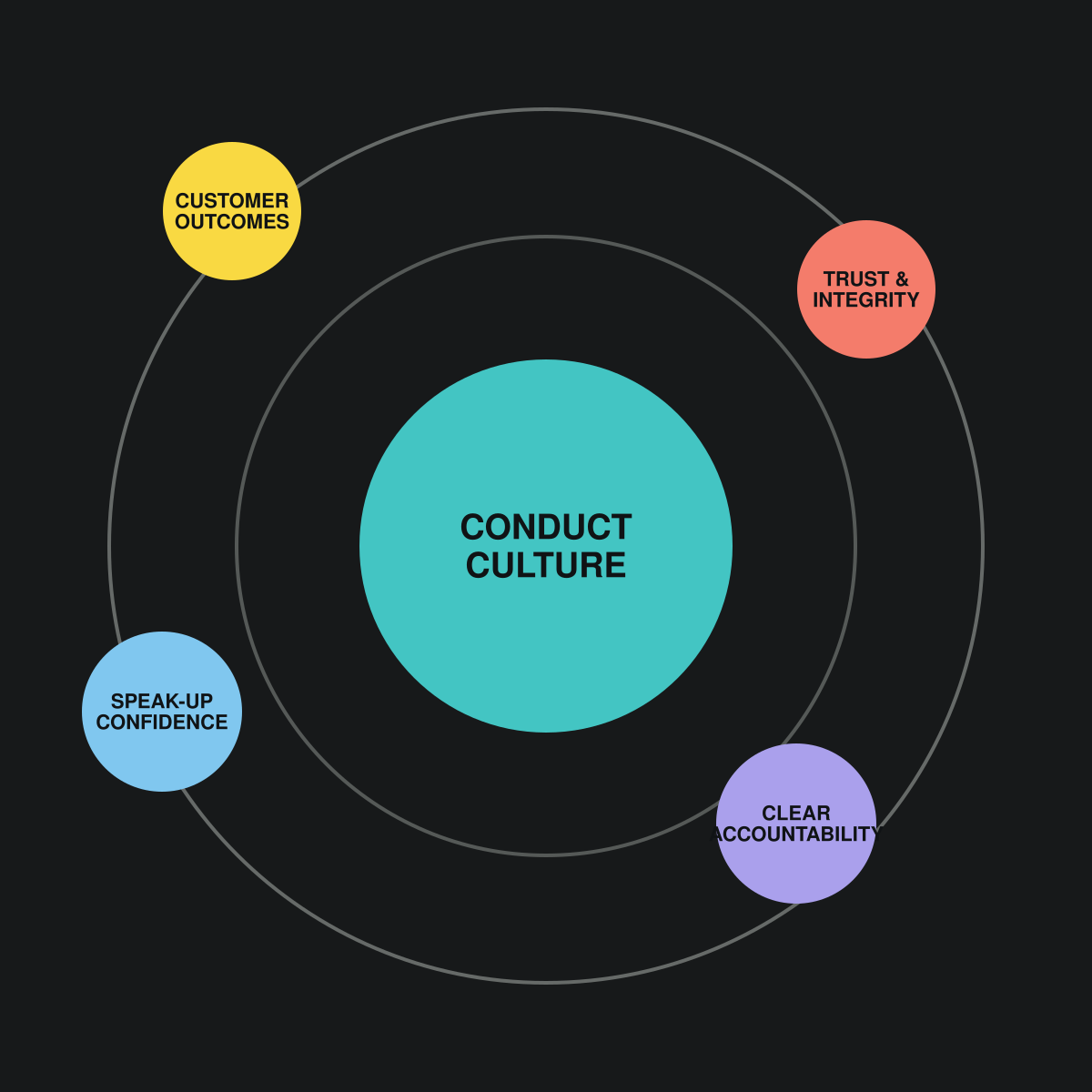
CONDUCT CULTURE
DETAILED ANALYSIS AND ACTIONABLE INSIGHTS
Understand what is happening beneath the scores, why it matters and where leadership attention may be required.
WHAT THE ASSESSMENT EXPLORES
Assess your culture across
12 connected areas.
The assessment looks beyond general employee engagement. It explores whether your stated purpose, values and standards are reflected in the decisions and behaviours employees experience every day.
01.
A Purposeful Community
Understand whether employees connect their work with the organisation’s purpose, customers and wider outcomes.
02.
Value-Driven Behaviours
Explore whether organisational values are clearly understood, consistently demonstrated and used to guide difficult decisions.
03.
The Leadership
Measure whether employees respect and trust senior leaders, and whether leadership words and actions remain aligned.
04.
Management
Understand whether managers support employees, demonstrate care and help their teams prioritise good customer outcomes alongside performance expectations.
05.
Employee Motivation
Explore whether employees feel recognised, supported and motivated to contribute their best work without inappropriate pressure.
06.
Mutual Respect
Assess whether employees experience fair treatment, respectful feedback and constructive challenge throughout the organisation.
07.
Two-way Engagement
Measure whether communication flows effectively and whether employees believe concerns and feedback lead to meaningful action.
08.
Challenge and Change
Understand whether employees feel comfortable questioning decisions, suggesting improvements and raising concerns that could affect customers.
09.
Workforce Accountability
Explore whether employees, managers and leaders take ownership, acknowledge mistakes and learn constructively from problems.
10.
Empowered People
Assess whether employees understand their responsibilities and have the authority, information and resources needed to make appropriate decisions.
11.
A Foundation of Trust
Understand whether employees experience psychological safety, fair treatment and confidence that sensitive feedback will be handled appropriately.
12.
Organisational Pulse
Bring the findings together to understand employees’ overall confidence, commitment and experience of the organisation’s culture.
Twelve connected areas. One honest view of the culture shaping behaviour, risk and customer outcomes.
WHEN TO USE IT
Cultural evidence for better-informed leadership decisions.
Use the Financial Services Assessment as part of an ongoing culture programme or when a specific organisational challenge requires deeper evidence.
Assessing culture and conduct
Understand whether employees experience the behaviours, accountability and psychological safety expected by the organisation.
Strengthening speak-up culture
Explore whether people feel comfortable challenging decisions, reporting concerns and providing honest feedback.
Supporting organisational change
Identify whether employees understand a transformation programme and feel involved, informed and able to adapt.
Investigating inconsistent customer outcomes
Examine whether commercial pressure, unclear responsibilities or management behaviour could be influencing everyday decisions.
Supporting mergers and integration
Identify cultural differences, shared strengths and areas of misalignment across newly combined organisations or teams.
Measuring cultural progress
Establish a baseline and repeat the assessment to determine whether previous actions have created meaningful change.
HOW IT WORKS
From setup to insight in five straight forward steps.
We help you configure the assessment before the Cultiv8tiv platform manages its delivery, analysis and reporting.
Configure your assessment
Define your organisation’s purpose and values, together with the leadership and management groups employees will be asked to consider.
Choose how to analyse the results
Decide whether you need organisation-wide findings or anonymous analysis across eligible teams, departments or business areas.
Invite your employees
Choose who will participate and set your closing date. The platform manages invitations and reminder emails.
Collect anonymous feedback
Employees complete the assessment online without needing to create an account. Identifying details are removed from the reporting so they can respond honestly.
Receive and act on your results
Once the assessment closes, receive your Culture Pulse Score, detailed report, category findings and actionable insights.
YOUR FINANCIAL SERVICES REPORT
See the cultural evidence behind organisational risk.
Your report turns employee responses into accessible insight for leadership, people, risk and compliance teams.
Culture Pulse Score
A headline measure of the overall health and strength of your organisational culture.
Report summary
A clear narrative explaining the organisation’s most significant cultural strengths and areas of concern.
Detailed category analysis
Explore the evidence behind every category score and understand the significance of the findings.
Strongest and lowest-scoring areas
Quickly identify where cultural foundations are strongest and where more focused attention may be required.
Question-level comparisons
Look beneath category averages to understand how employees responded to specific questions.
Response distributions
See whether employees share a consistent experience or whether headline scores conceal divided opinions.
Team and department insight
Where anonymity thresholds are met, compare eligible parts of the organisation and identify areas with distinct cultural experiences.
WHO SHOULD USE IT?
For leaders responsible for culture, conduct and organisational health.
FOR BOARDS AND SENIOR LEADERS
Gain an independent view of whether the organisation’s purpose, values and expected standards are reflected in employees’ everyday experience.
Use the assessment to strengthen oversight, understand cultural risk and make better-informed leadership decisions.
FOR RISK, COMPLIANCE & PEOPLE TEAMS
Bring employee evidence into culture, conduct and people programmes.
The assessment helps you identify where policies and intended practices may not be consistently reflected in behaviour across the organisation.
FOR FINANCIAL SERVICES CONSULTANTS
Introduce objective cultural evidence into governance, transformation, leadership and organisational development programmes.
Use the findings to focus your work and establish a baseline against which subsequent progress can be measured.